Welcome! What's On Your Mind?

Go Ahead, Search Our Blog...

A Trifecta of Versatility

trifecta

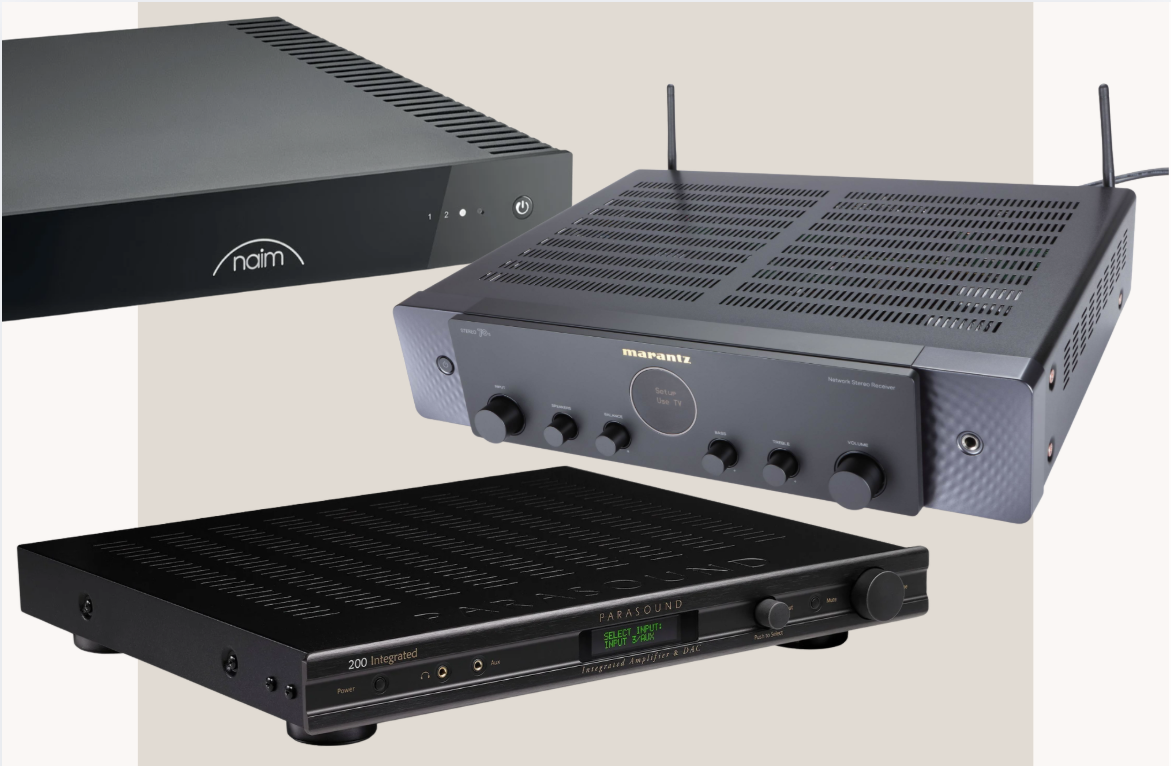
Single box audio solutions are not exactly breaking news. In fact, the streaming amplifier category is overflowing with choices at wildly varying price points and feature sets. The Naim Audio Uniti platform debuted way back in 2009 and has proven to be the standard bearer for sonic excellence and ease of operation in a single chassis. They continue to be built in the Salisbury, UK factory and, while this assures exceptional build quality, it pushes the price out of reach for some.Well, we’re here to highlight three wallet friendly one-boxers that “borrow” from Naim Audio’s versatility while offering a different sonic spin.


The Marantz Stereo 70S is one of our most popular items and for many reasons. It delivers a robust 75 watts per channel of Class A/B power and 192 kHz / 24-bit audio. The 6-input 8K HDMI board and ARC allows for seamless integration with the display of your choice. Accessing the stream of your dreams is guaranteed as well; it basically does them all. If you don’t fancy working with the supplied remote, the HEOS app will replicate its functionality and then some. Speaking of HEOS, you can build a plug-and-play multi-room environment by simply adding HEOS-enabled Smart speakers, and run all zones from the app. At $1299.99 it’s a very compelling package.

Where was the Parasound NC200INT integrated amplifier ($1400.00) when I was getting started in the hobby. This wonderful amp is brimming with assets. One hundred and ten watts of Pascal Class D power, Burr Brown based digital connectivity with 24-bit/192kHz resolution, and a rather good MM/MC phono stage, come standard. If that’s not enough, there are tone controls, analogue bass management, a dedicated headphone amplifier, and a back-lit remote. The lack of internal streamer may deter some, but the addition of the cost-effective WiiM Mini quickly solves that problem. To quote the Parasound hype sticker, the “NC200INT offers precision engineering and powerful performance—all wrapped in a sleek, 1U chassis at an unbeatable price point. Ideal for listeners who want a complete system upgrade without compromises, it delivers clarity, warmth, and connectivity without overextending your budget.”

Ignore at your peril.
Continue reading

Bristles Killing Energy

bristles-kilin_20260930-210010_1

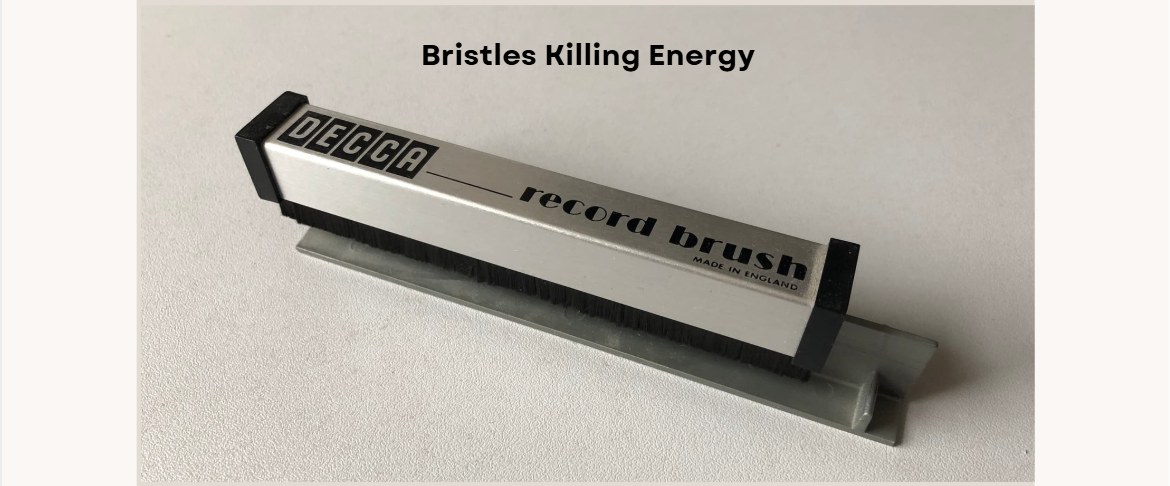
While hardly the most riveting topic, the humble record brush remains key to analogue fulfilment. The carbon fibre variant, first introduced in the seventies by Decca in England, is the accepted standard. The advantage of carbon fibres is they reach deeper into the groove for that pesky dust while conveniently discharging static. There have been myriad of different manufacturers down the years and we routinely stock four versions.

The Rekkord LP brush is what I consider to be the bare minimum. It employs two rows of carbon fibre bristles that gently lift the dust. It is cleaned by passing the bristles over the attached bracket. It is simple, very affordable at just 20 bucks, and effective. The Audioquest refines this basic design by employing a whopping 1,248,000 super-conductive carbon fibres (unconfirmed at the time of writing) and an uncoated gold grip making you the static-eliminating ground. Neat!

Things get a little more interesting with the designs from Ortofon and Kirmuss Audio. The Ortofon Record Brush ($51.00) employs those same two rows of bristles but these are much more tightly wound. This allows you to be a little more vigorous, resulting in more effective debris removal. Also, the stylish injection molded handle contains a conductive plastic to help disperse static.

The Kirmuss Audio KA-B1 “2-in-1” record brush ($67.99) has clearly been designed by a person who has given day to day record care plenty of thought. One side of the brush features those soft carbon fibre rows, spaced slightly further apart than the AQ or Rekkord offerings, and is designed for static elimination. On the flip, is a parastatic wet/dry velvet “strip” to pull off deep seated dust. Also, this side may be used as a “buffer” at the final stage of cleaning with a record cleaning machine. An extra step but it’ll be worth it to some. Lance noted the KA-B1 to be particularly efficacious for cat hair removal.

 All four brushes are recommendable and, depending on your requirements, one is likely to land over another. I have been using the Ortofon brush for a while now and it works for me. Maybe it’s that cool Danish industrial design...

A Trifecta of Versatility

Trifecta-scree-shot

Where was the Parasound NC200INT integrated amplifier ($1400.00) when I was getting started in the hobby. This wonderful amp is brimming with assets. One hundred and ten watts of Pascal Class D power, Burr Brown based digital connectivity with 24-bit/192kHz resolution, and a rather good MM/MC phono stage, come standard. If that’s not enough, there are tone controls, analogue bass management, a dedicated headphone amplifier, and a back-lit remote. The lack of internal streamer may deter some, but the addition of the cost-effective WiiM Mini quickly solves that problem. To quote the Parasound hype sticker, the “NC200INT offers precision engineering and powerful performance—all wrapped in a sleek, 1U chassis at an unbeatable price point. Ideal for listeners who want a complete system upgrade without compromises, it delivers clarity, warmth, and connectivity without overextending your budget.”  Ignore at your peril.

Sometimes it’s about how you look at things, and in this case, it took a YouTube review by Andrew Robinson to truly see the Naim Audio CI-Uniti-102 streamer amplifier ($1949.00). With the custom install logo and HDMI eARC it was easy to overlook this amplifier as a legitimate audio solution. A big mistake.

This amplifier rocks. The 150 watts per channel in 8 ohms delivers a devil-may-care performance with just about any loudspeaker. In fact, the 102 is 2 ohm stable, delivering a whopping 480 watts into this load. This impressive spec is possible due to the Texas Instruments TPA3255 chips being deployed in a parallel bridged mode with a 1.2 kilowatt switch mode power supply. As good as the Parasound is, Naim’s effortless sound just about edged it in absolute sonic terms. It doesn’t have the complete connectivity and features of the Marantz, but the HDMI and optical inputs will likely be enough for most. The Naim control app allows you to dive deep into the 102's capabilities. There are speaker profiles for all the Focals and the Manager software is the ultimate sonic tweak. Robinson pointed to a lack of a traditional remote being a dealer breaker for some. Naim have corrected the oversight and, come late September, a handheld will be available to assist with basic functions, letting you put your phone down and concentrate on the music.

All three amps have their merits. The price and feature set of the Marantz is hard to argue with. The Parasound will attract the burgeoning audiophile with its seductive sound and wallet friendly price tag. The Naim, at least for me, is the one. It is its fantastic combination of power, flexibility, and customizability that sets it apart and, just maybe, Naim Audio’s Uniti excellence is in reach after all.

Bristles Killing Energy

bristles

While hardly the most riveting topic, the humble record brush remains key to analogue fulfilment. The carbon fibre variant, first introduced in the seventies by Decca in England, is the accepted standard. The advantage of carbon fibres is they reach deeper into the groove for that pesky dust while conveniently discharging static. There have been myriad of different manufacturers down the years and we routinely stock four versions.

The Rekkord LP brush is what I consider to be the bare minimum. It employs two rows of carbon fibre bristles that gently lift the dust. It is cleaned by passing the bristles over the attached bracket. It is simple, very affordable at just 20 bucks, and effective. The Audioquest refines this basic design by employing a whopping 1,248,000 super-conductive carbon fibres (unconfirmed at the time of writing) and an uncoated gold grip making you the static-eliminating ground. Neat!

Things get a little more interesting with the designs from Ortofon and Kirmuss Audio. The Ortofon Record Brush ($51.00) employs those same two rows of bristles but these are much more tightly wound. This allows you to be a little more vigorous, resulting in more effective debris removal. Also, the stylish injection molded handle contains a conductive plastic to help disperse static.

The Kirmuss Audio KA-B1 “2-in-1” record brush ($67.99) has clearly been designed by a person who has given day to day record care plenty of thought. One side of the brush features those soft carbon fibre rows, spaced slightly further apart than the AQ or Rekkord offerings, and is designed for static elimination. On the flip, is a parastatic wet/dry velvet “strip” to pull off deep seated dust. Also, this side may be used as a “buffer” at the final stage of cleaning with a record cleaning machine. An extra step but it’ll be worth it to some. Lance noted the KA-B1 to be particularly efficacious for cat hair removal.

All four brushes are recommendable and, depending on your requirements, one is likely to land over another. I have been using the Ortofon brush for a while now and it works for me. Maybe it’s that cool Danish industrial design...

SUBSCRIBE TO OUR MONTHLY NEWSLETTER
A humble missive that will keep you apprised of new products, events, promotions and sales.
audio ark

10745 124 Street NW
Edmonton, AB T5M 0H2
(780) 453-6624

BBB
Sure innovations
a division of

sure innovations


Powered By One Firefly   |    Sitemap   |    Privacy Policy